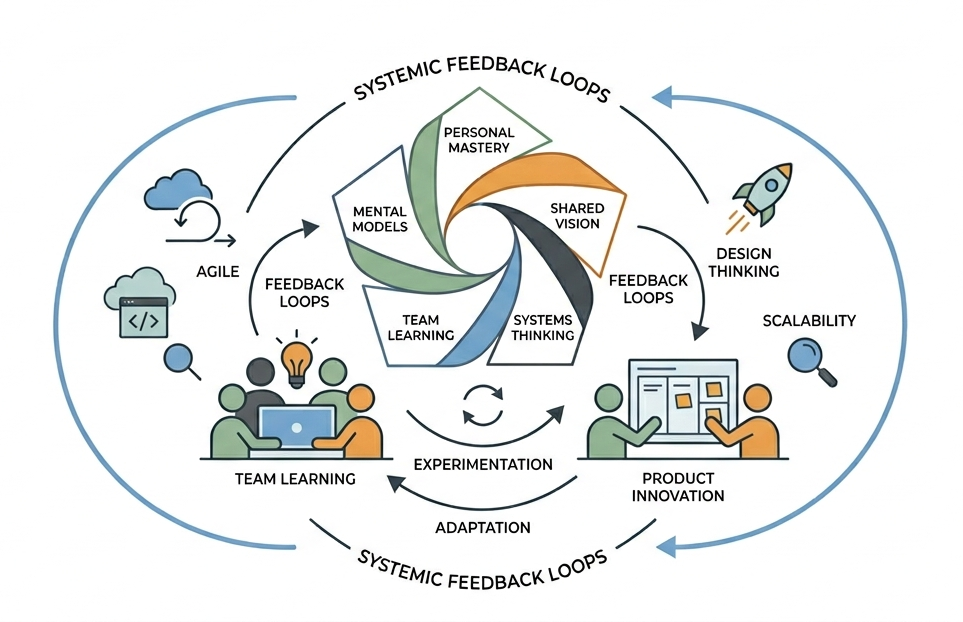
How adaptive teams improve design work?

The article looks at how design teams can stay flexible by adjusting roles, communication, and decision-making as projects change, instead of trying to force one fixed team structure to fit everything.

https://uxdesign.cc/designing-adaptive-teams-cee73e55013d?source=rss----138adf9c44c---4

Here’s the image from the article that sets up the idea nicely.

Arthur

@ArthurDent, I like how the article treats roles as movable, like having one person run critique on Monday and someone else own decisions by Friday when the scope shifts.

BobaMilk

Rotating critique lead and decision owner spreads the context fast, so you’re not stuck waiting on one “vision keeper” when priorities flip on Wednesday.

It also makes handoffs sturdier because everyone’s seen the work evolve, not just the Monday facilitator.

Sora

Rotating the critique lead and decision owner kills the single point of failure, so a Wednesday priority flip doesn’t force a full redo.

After each critique, drop a two-line “what we decided and why” note in the Figma file so the context survives time zones and PTO.

Sarah

Rotating the critique lead also lets you run two small, timeboxed explorations in parallel and converge fast without waiting on one person.

Your two-line “decided and why” note gets even stronger if it includes the ticket ID or the user insight snippet that triggered the call.

Hari