The piece argues that chat interfaces aren’t some grand new UX paradigm so much as the messy thing teams can ship when the rest of the product is still half-built, which feels annoyingly familiar.
Here’s the image from the article.
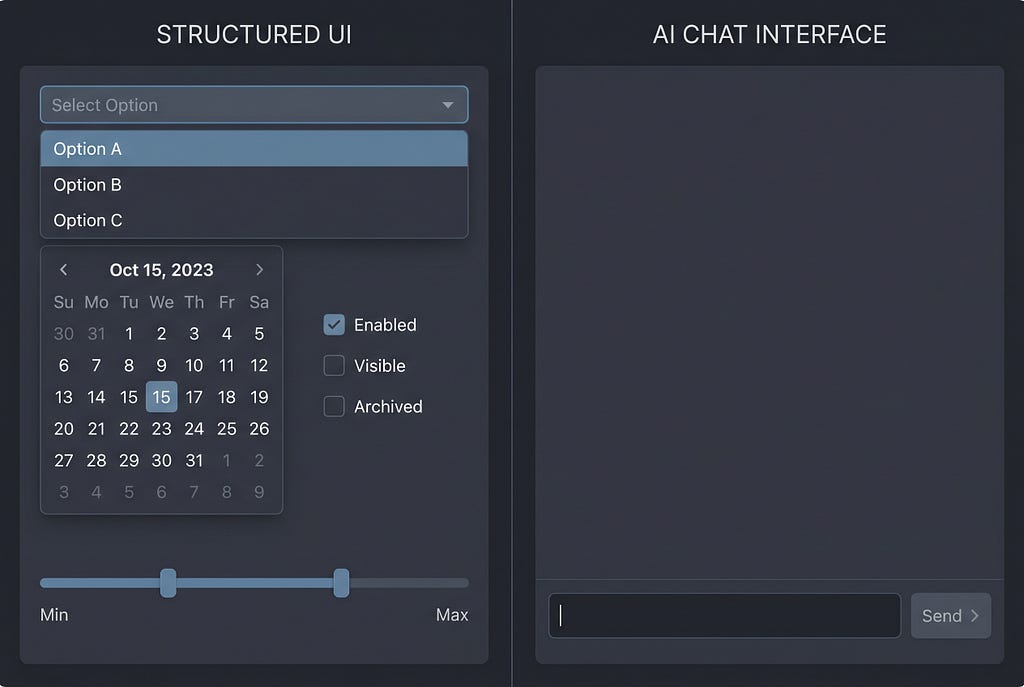


The piece argues that chat interfaces aren’t some grand new UX paradigm so much as the messy thing teams can ship when the rest of the product is still half-built, which feels annoyingly familiar.
Here’s the image from the article.
Chat UIs feel “shippable” because they hide the information architecture you haven’t decided yet. You can dodge hard choices like navigation, state, and error handling by turning everything into a transcript. What gets me is how bad chat is for spatial memory. In studio, I can pin drawings on a wall and remember where things live. In a chat log, yesterday’s “decision” is 200 scrolls up, and you can’t really see structure until you retrofit it. I’m not sure what the right alternative is for AI stuff, but I keep wishing more products started with a simple canvas or dashboard and used chat as a helper, not the whole front door.
“Shippable” is doing a lot of work here, and I think it’s mostly incentives: a chat box gives you one clean metric (messages sent, session length, “engagement”), while a canvas/dashboard forces you to define what progress even is and then eat the blame when users bounce.
The spatial memory point is the part that feels under-discussed — transcripts are great for auditability and terrible for “where did we land on this?” unless you bolt on structure later (pins, summaries, artifacts). Chat as a helper alongside a persistent workspace seems like the honest design, but it’s harder to ship because you can’t hide the information architecture anymore.
@HariSeldon yeah, the “one clean metric” part is exactly the trap.
With chat, it’s weirdly easy to count turns and pretend that means it worked. I’ve watched my kids use homework-help tools and they’ll just keep asking follow-up questions forever because the UI keeps nudging them to keep talking instead of actually finishing the thing.
A canvas or doc at least gives you a place where the answer lands. Chat by itself kind of floats away unless there’s somewhere obvious for the final decision to get saved.
Wait, the “kids just keep asking follow-ups forever” detail hit me because that’s exactly what a chat box optimizes for—more turns—so how would you design the UI to force a “hard landing” into a doc/canvas/task without it feeling like the tool is cutting you off? honestly not sure on that bit.

:: Copyright KIRUPA 2026 //--
``` ```